

The \"Anti-Recession\" Blueprint: How to Build a $100k Asset Selling \"Digital Blueprints\"
Most people looking for a home business make the same mistake: they look for something "trendy." They jump into dropshipping, crypto, or AI-churned content. But the real money—the "quiet money"—is often hidden in industries that have been around for decades but are suddenly exploding due to a shift in the global economy.
After months of researching high-profit/low-friction business models, I’ve identified a massive "quiet" winner:
The Digital Pattern Architecture Business.
If you’ve ever wanted a business where you don’t have to manage a team, handle physical inventory, or spend your day on Zoom calls, this is the deep dive you’ve been waiting for. This is about turning a single creative "blueprint" into a recurring revenue stream that scales globally while you sleep.
The Philosophy of the "Quiet Profit" Model
There’s a specific type of entrepreneur who thrives in solitude. They don't want to be "influencers." They want to be creators. The "Quiet Profit" model is built on three pillars:
1. Zero Human Friction: Your product is instructions, not your time. Once the instruction is perfect, the customer is satisfied without needing to talk to you.
2. The Solitude Factor: This business rewards the person who can go into "deep work" mode for 4 hours a day, perfecting a design that will eventually sell for years.
Why "Pattern Architecture" is Today's Best Kept Secret
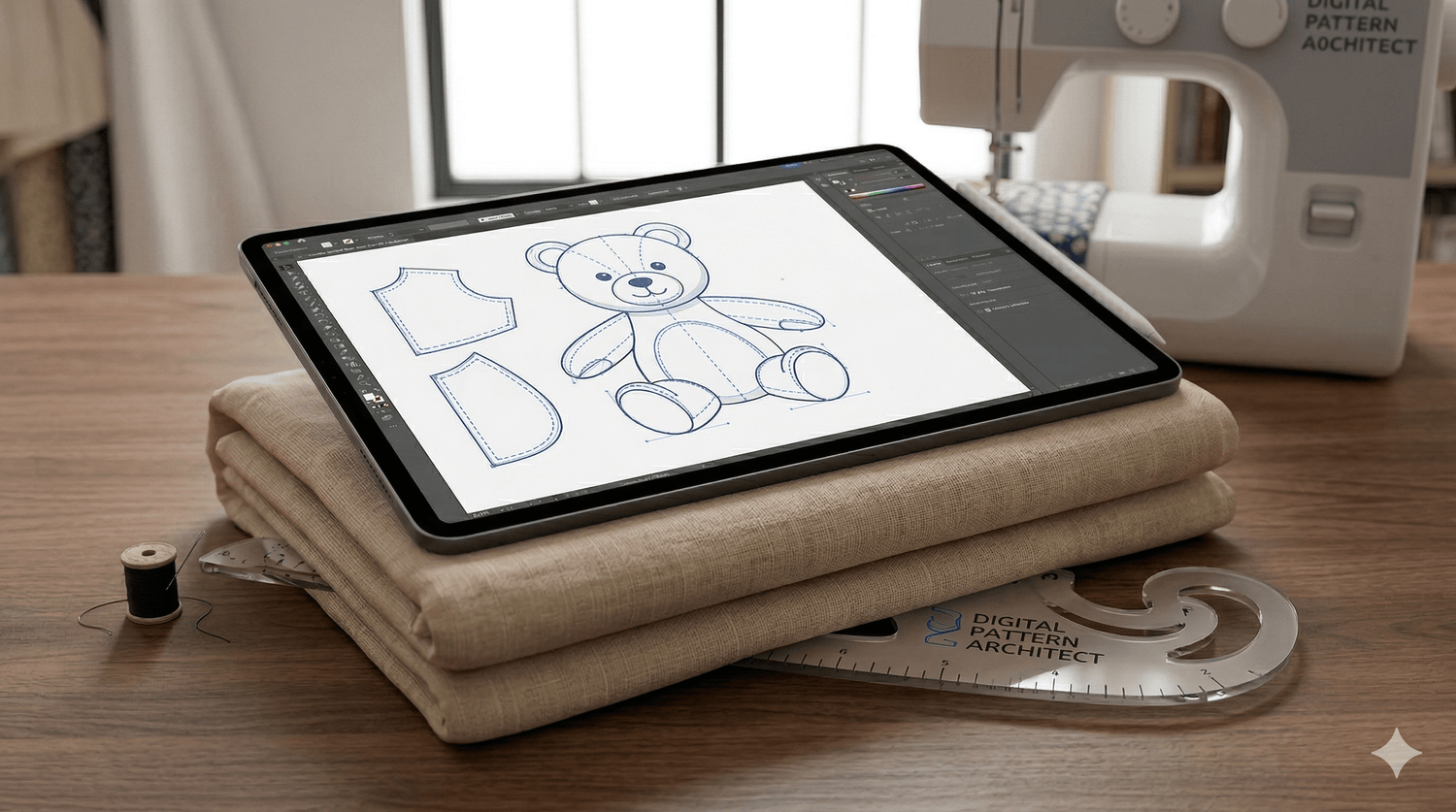
When we talk about "patterns," most people think of old-fashioned hobbyists.
That is a billion-dollar mistake.
Modern patterns—whether for stuffed animals, boutique home decor, or modular organizers—are high-demand digital assets. As the global economy fluctuates, we are seeing a massive surge in the "DIY Economy
The Recession-Proof Loophole
Data shows that when the economy dips, "leisure spending" shifts. People stop buying $50 premade gifts and start spending $15 on a digital pattern to make the gift. It’s more personal, it’s higher quality, and it’s significantly cheaper for the consumer.
As a Pattern Architect, you aren't just selling a hobby; you are selling the solution to a tightening budget. While other retailers struggle with "depressed sales," the pattern mailbox stays full because your product helps people save money while staying productive.
The Idea Lab Filter Test:
The Hard Metrics
I don’t recommend ideas based on "vibes." I run them through the Idea Lab Filter to see if they actually hold up as a legitimate business.
Here is the breakdown for the Digital Pattern model:
Criteria
Result
Analysis
Market Demand
High
The DIY and "handmade" movement is growing at a 5-7% CAGR. It thrives in both good and bad economies.
Startup Cost
Low
You can launch your first "Line" for under $600. No warehouse, no massive inventory.
Scalability
Extreme
Since the product is digital (PDF/SVG), your cost of goods sold (COGS) is essentially $0 after the first sale.
Risk Level
Low
If a design doesn't sell, you've only lost a few hours of time, not thousands of dollars in stock.
Time to Revenue
Medium
You need roughly 8–12 weeks to build "algorithm authority" on platforms like Pinterest or Etsy.
The Roadmap:
From Design to $100,000 Quiet Profit
The goal of this blog post isn't just to give you an idea; it’s to give you the math.
Research suggests that a high-performing pattern business can generate anywhere from $5,000 to $100,000+ per year.
Here is how you bridge that gap:
Phase 1: The Research & Prototyping (Weeks 1-4)
You don't start with a thousand ideas. You start with one perfect line.
Identify a Niche: Don't just make "a bear." Make a "Vintage 1920s-style Mohair Bear" or "Modern Minimalist Nursery Decor."
The "Zero-Defect" Standard: In this business, your reputation is your currency. Your instructions must be so clear that a beginner can succeed. If your work is "nearly perfect," customers will show their happiness by buying every new release you drop.
Phase 2: Building the Digital Infrastructure (Weeks 5-8)
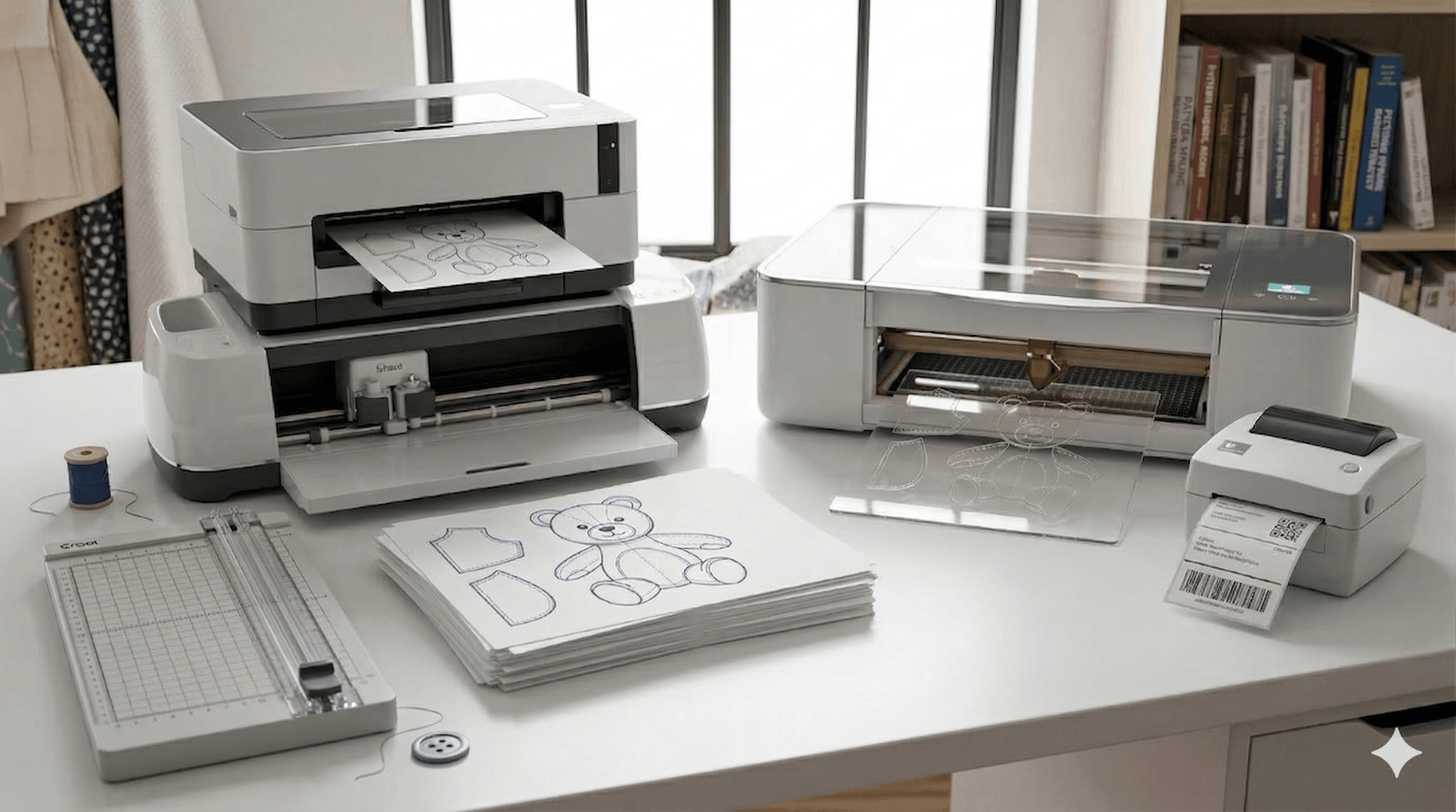
Today, you aren't just mailing paper patterns (though you can). You are building a Digital Asset Library.
Equipment Needed: You don't need a factory. You need a solid desk, a phone, and a PC. That’s it.
The Tech Stack: Use vector software (like Illustrator or Inkscape) to digitize your drawings. This allows your customers to print them at home or use them with cutting machines.
Phase 3: The "Inertia" Marketing Phase (Weeks 9-12)
This is where most people quit, but it’s where the journey actually begins.
The Pinterest Engine: Patterns are highly visual. A single "viral" pin can drive traffic to your shop for years.
The "Low-Motion" Video Strategy: On platforms like Facebook Reels or YouTube, you don't need complex edits. Simple, stable shots of the "making-of" process build trust and desire.
Crushing the $100k Ceiling:
The Math of Volume
To hit six figures, you need a System of Assets. Let's look at the numbers. If your average pattern price is $15 (a sweet spot for digital downloads):
10 Sales/Day: $4,500/month (~$54k/year)
20 Sales/Day: $9,000/month (~$108k/year)
In a global market of roughly 200 million active crafters across Etsy, Pinterest, and specialized forums, hitting 20 sales a day is not a "pipe dream." It is a matter of search engine optimization (SEO) and consistent output.
The more original and "signature" your patterns are, the higher your earnings potential becomes. Originality is your "moat." If no one else makes a pattern like yours, you own the market.
Why Now? The Digital Era Context
We are living in an era of "Automation Anxiety." People are tired of AI-generated junk. They are craving tactile, handmade experiences. The "Digital Pattern Architect" fills this void. You are providing the bridge between the digital world and the physical craft. You provide the blueprint; they provide the labor. You keep the profit; they keep the satisfaction. It is the most ethical and sustainable business model I’ve researched this year.
The Verdict
If you are a perfectionist who loves "solitude work"—where you can focus intensely without interruption and see your work rewarded by happy, repeat customers—this is your calling.
It’s low-cost, low-risk, and offers extreme scalability. It is the definition of a "Home Biz Idea" that actually works in the real world.

I’m Gom, and I scout the best home biz ideas so you can skip the guesswork. Subscribe to join the journey! Also, check the link below for my #1 pick among thousands of opportunities available right now.


Trending